“Is our water safe?” is one of the questions we hear most often. The honest answer is that you cannot tell by looking. Clear water can be full of bacteria, and slightly cloudy water can be harmless. The good news is that you can learn a surprising amount about your water at home with a few inexpensive tools — and know exactly when it is worth paying for a laboratory test. This guide walks you through what to test, how to do it, what the numbers mean against Pakistani and WHO standards, and what to do next.
Why testing matters before you buy a purifier
Different water problems need different solutions. Buying the wrong purifier wastes money and can leave your family unprotected:
- If your problem is germs and particles in sweet water, an ultrafiltration purifier such as Water Ka Doctor is ideal — it removes bacteria and parasites while keeping minerals.
- If your problem is salty or brackish water (high TDS), you need reverse osmosis (RO), and ultrafiltration alone will not change the taste.
- If your problem is a specific chemical such as arsenic, you need targeted treatment and professional advice.
A few simple tests tell you which of these situations you are in.
Step 1: Use your senses (but do not trust them completely)
Start with a simple observation test. Fill a clean, clear glass with water from the tap you drink from and look at it against a white background in good light.
| What you notice | Possible cause | What to do next |
|---|---|---|
| Cloudy or muddy | Sediment, silt, damaged pipes, dirty tank | Clean tank; filter with ultrafiltration |
| Brown or reddish tint | Rust from old iron pipes or tank | Check plumbing; filter removes particles |
| Salty or “heavy” taste | High TDS | Measure TDS; you may need RO |
| Rotten-egg smell | Hydrogen sulphide, bacterial activity | Test for bacteria; clean storage |
| Sewage or musty smell | Possible sewage contamination | Stop drinking untreated; test for bacteria urgently |
| Strong bleach smell | High chlorine dose | Usually safe; let it stand or filter |
Step 2: Measure TDS with a digital meter
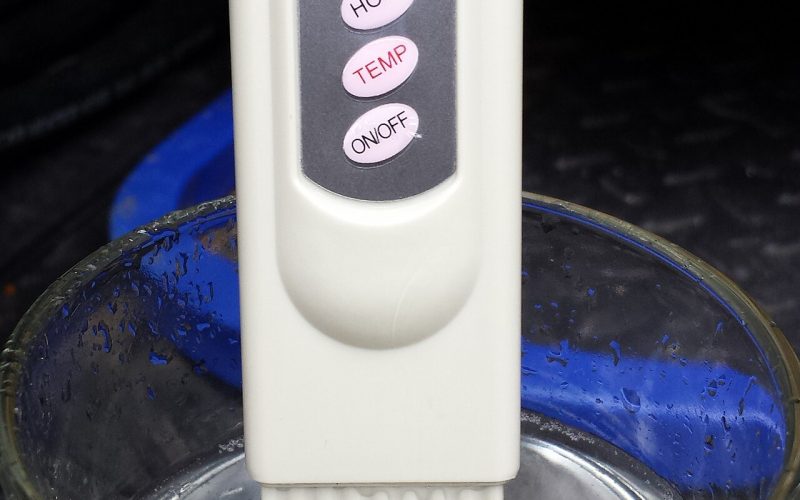
TDS (total dissolved solids) is the amount of dissolved minerals and salts in water, measured in milligrams per litre (mg/L) or parts per million (ppm). Pocket TDS meters are cheap, widely available in Pakistan and give a reading in seconds.
How to measure
- Rinse a clean glass with the water you want to test, then fill it.
- Remove the meter cap, switch it on and dip the electrodes into the water without touching the glass.
- Stir gently and wait for the reading to stabilise.
- Rinse the electrodes with clean water after use and replace the cap.
What the numbers mean
| TDS (mg/L) | Taste and suitability | Recommended treatment |
|---|---|---|
| Below 300 | Excellent taste | Ultrafiltration (Water Ka Doctor) |
| 300 – 600 | Good | Ultrafiltration (Water Ka Doctor) |
| 600 – 1,000 | Acceptable, may taste slightly mineral | Ultrafiltration usually fine; RO optional for taste |
| Above 1,000 | Salty or brackish; above Pakistan’s national limit | Reverse osmosis or alternative source |
These bands are based on WHO’s guidance on taste and Pakistan’s National Standards for Drinking Water Quality, which set an upper TDS limit of below 1,000 mg/L. For a deeper explanation, read What is TDS in water and when do you need RO?
Step 3: Check pH, chlorine and hardness with test strips
Multi-parameter test strips, sold for aquariums, pools and drinking water, are an easy way to check several things at once. Dip a strip, wait for the stated time and compare the colours with the chart.
- pH — Pakistan’s national standard and WHO guidance both point to a range of about 6.5 to 8.5. Water outside this range may taste odd, corrode pipes or indicate contamination.
- Free chlorine — If you are on municipal supply, a small amount of residual chlorine is a good sign the water was disinfected. Zero chlorine at the tap does not mean the water is unsafe, but it means there is no protection against contamination in the pipes.
- Hardness — Hard water (high calcium and magnesium) leaves white scale in kettles. It is not a health risk in itself, and these minerals contribute to your daily intake — see why minerals in drinking water matter.
- Nitrates and nitrites — Some strips include these. Elevated nitrate, often from fertiliser or sewage, is especially risky for infants. If strips show high nitrate, get a lab test.
Step 4: Screen for bacteria
Bacteria are the most common and most dangerous water problem in Pakistan, and they are also the hardest to test at home.
Home screening kits
H2S presence/absence kits are a low-cost screening tool used in many developing countries. You fill a small bottle containing a reagent with your water sample and keep it at room temperature. If the water turns black within a day or two, it indicates likely faecal contamination. These kits are useful as a warning sign, but they are not as precise as a laboratory test.
Laboratory testing
For a reliable answer, a laboratory test for total coliforms and E. coli is the standard. Pakistan’s standard for drinking water is zero E. coli per 100 mL — any detection means the water is unsafe to drink without treatment.
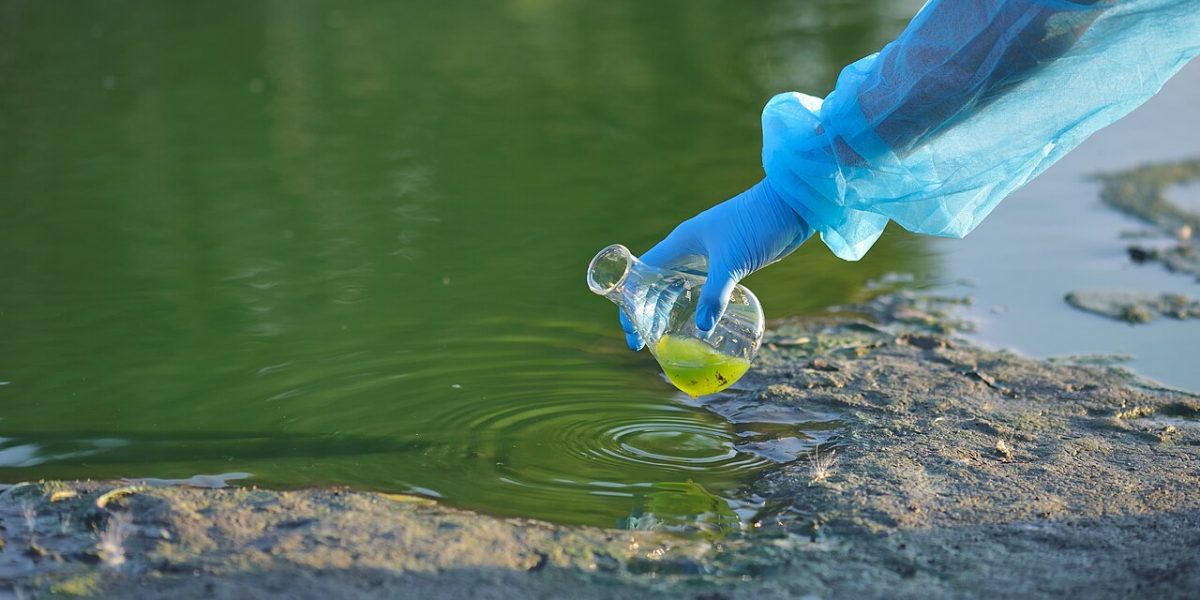
When collecting a sample for a lab:
- Use the sterile bottle provided by the lab — never a reused drinks bottle.
- Wash your hands. Do not touch the inside of the bottle or cap.
- Let the tap run for a minute before filling (unless the lab asks for a “first draw” sample).
- Keep the sample cool and deliver it to the lab within the time they specify, usually within 24 hours.
Step 5: Know when to test for chemicals
Some contaminants need specialist laboratory testing. Consider a full chemical test if:
- You use groundwater from a hand pump or borehole in an area where arsenic has been reported, including parts of Punjab and Sindh along the Indus.
- Your source is near industrial areas, tanneries or textile units, where heavy metals may be present.
- Your water is near intensive farming, where nitrates and pesticides may leach into groundwater.
- You notice fluorosis (brown mottled teeth) in your community, which can indicate high fluoride.
PCRWR operates water quality laboratories in several cities, and accredited private labs also offer comprehensive panels.
Quick reference: key drinking water limits
| Parameter | Pakistan national standard (2010) | Why it matters |
|---|---|---|
| E. coli / faecal coliforms | 0 per 100 mL | Indicates faecal contamination and disease risk |
| TDS | Below 1,000 mg/L | Taste and suitability |
| pH | 6.5 – 8.5 | Taste, corrosion, contamination indicator |
| Arsenic | 50 µg/L or less (WHO guideline: 10 µg/L) | Long-term exposure causes serious illness |
| Nitrate | 50 mg/L or less | Risk to infants |
| Fluoride | 1.5 mg/L or less | Dental and skeletal fluorosis |
| Turbidity | Below 5 NTU | Cloudiness; can shield germs from disinfection |
How often should you test?
Water quality is not fixed. A source that was safe last year can change after a flood, a burst sewer, new construction nearby or a switch from line water to tankers. A sensible routine for most households looks like this:
| Test | Suggested frequency |
|---|---|
| Visual and smell check | Every day, without thinking about it — notice changes |
| TDS reading | Monthly, and every time you buy water from a new tanker or borehole |
| pH and chlorine strips | Every few months, or if taste changes |
| Bacteria (lab) | Once a year, and after floods, plumbing repairs or illness in the household |
| Full chemical panel (lab) | Once when you start using a new groundwater source, then every few years |
You should also test the water after your purifier from time to time, not just the water going in. This confirms that the system is working and that your storage containers are not recontaminating clean water.
Common testing mistakes
- Testing the wrong tap. Test the tap or container your family actually drinks from, not a convenient garden tap.
- Using dirty containers. A sample collected in an unwashed bottle tells you about the bottle, not the water.
- Relying on an uncalibrated meter. Cheap TDS meters drift over time. Check yours occasionally against bottled water with a known TDS on its label.
- Reading strips too early or too late. Colours change with time; follow the timing on the pack exactly.
- Treating one good result as permanent. One clean test is a snapshot. Keep testing periodically, especially in the monsoon.
What to do with your results
- Sweet water (TDS below 1,000) with bacteria or sediment — the most common situation in Pakistani cities and villages. An ultrafiltration purifier such as Water Ka Doctor removes 99.9999% of bacteria, parasites and suspended solids, with no electricity.
- High TDS (above 1,000) — you need RO, or a different drinking source. Water Ka Doctor does not reduce TDS.
- Arsenic or other chemicals detected — seek specialist advice and use an alternative safe source for drinking until the problem is solved.
- Everything looks fine — re-test periodically, especially after floods, plumbing work or a change of source.
Not sure where to start? Try our free Water Quality Checker, or book our professional water testing service for a full report with a plain-language recommendation.
Get a clear answer about your water
Our testing service checks the key physical, chemical and microbiological parameters and tells you exactly which treatment you need — and which you don’t.
Book Water TestingPractical takeaway
Start with your senses, then use a TDS meter to decide between ultrafiltration and RO. Add test strips for pH and chlorine, and use a lab test for bacteria and chemicals when it matters. Above all, remember that clear water is not the same as safe water. Test to choose the right treatment, then treat your drinking water every day.