If you have ever watched a salesperson dip a small digital pen into your tap water and announce a scary number, you have met TDS. It is the most quoted — and most misunderstood — figure in the water purifier business. Used correctly, a TDS reading is genuinely useful: it tells you whether your water needs salt removal or just germ removal. Used incorrectly, it convinces people to buy expensive machines they do not need. This guide explains exactly what TDS is and how to use it.
What TDS actually measures
TDS stands for total dissolved solids: the combined amount of minerals, salts and other substances dissolved in water. It is expressed in milligrams per litre (mg/L), which for drinking water is practically the same as parts per million (ppm).
Most of the TDS in natural water comes from harmless or beneficial substances:
- Calcium and magnesium — the minerals that make water “hard”
- Sodium and potassium
- Bicarbonates, chlorides and sulphates
- Small amounts of silica, iron and other elements
As rain soaks through soil and rock, it dissolves these minerals. That is why groundwater usually has a higher TDS than rainwater, and why boring water in parts of Sindh, southern Punjab and Balochistan, where groundwater is naturally saline, can taste distinctly salty.
What TDS does not measure
This is the critical point. A TDS meter cannot see:
- Bacteria, viruses or parasites — the causes of diarrhoea, typhoid and cholera
- Mud, rust, sand and micro-plastics — undissolved particles
- Many specific toxic chemicals at harmful but tiny concentrations, such as arsenic
In other words, the most common health threat in Pakistani water — faecal bacteria — is completely invisible to a TDS meter. Water reading 150 mg/L can make you seriously ill; water reading 450 mg/L can be perfectly safe. TDS describes the character of the water, not its safety.
TDS levels: what is good, acceptable and too high?
The World Health Organization has not set a health-based limit for TDS, but it describes how water at different TDS levels is generally perceived by drinkers. Pakistan’s National Standards for Drinking Water Quality (NSDWQ) set a limit of less than 1,000 mg/L. Together, they give a practical scale:
| TDS (mg/L) | Taste and quality | What to do |
|---|---|---|
| Below 50 | Very flat; typical of RO output or rainwater | Fine to drink, but low in minerals |
| 50 – 300 | Excellent, fresh taste | Remove germs and particles only (UF) |
| 300 – 600 | Good | Remove germs and particles only (UF) |
| 600 – 900 | Fair; may taste slightly heavy | Usually acceptable; decide by taste and lab test |
| 900 – 1,200 | Poor; noticeably salty or bitter | Consider RO |
| Above 1,200 | Unacceptable taste; brackish | RO needed |
Where you fall on this scale is the single best guide to which purifier technology you need. For the full decision process see How to Choose the Right Water Purifier in Pakistan.
How to measure TDS correctly
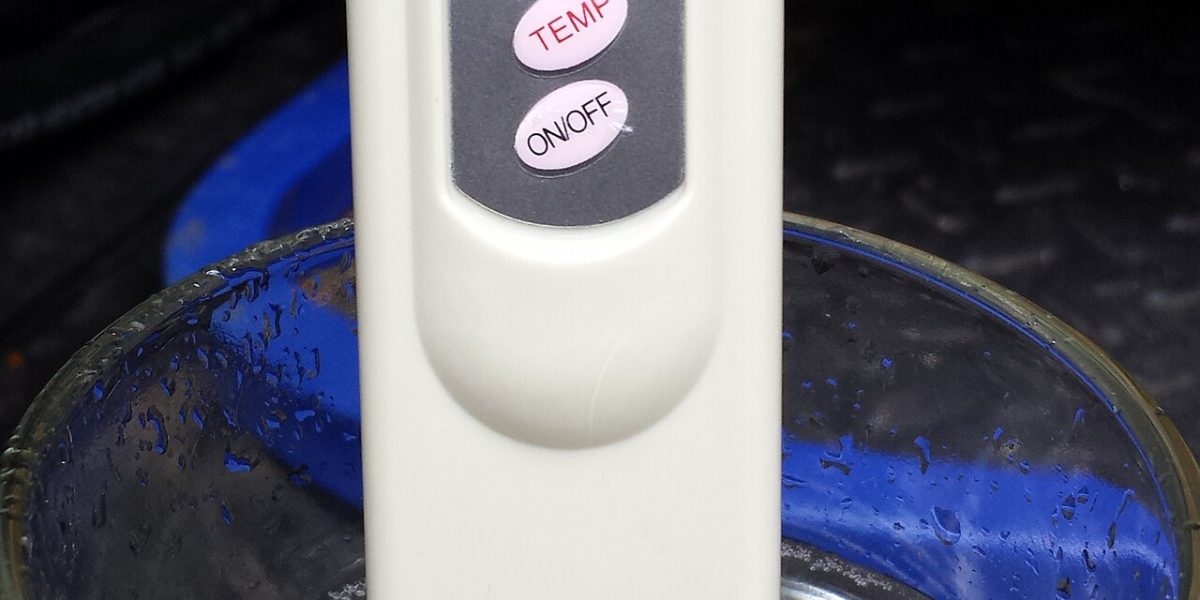
A handheld TDS meter is inexpensive and easy to use, but a few habits make the reading reliable:
- Use a clean glass. Rinse it twice with the water you are testing.
- Remove the cap and switch on the meter; most read automatically.
- Dip to the marked line and stir gently to remove air bubbles.
- Wait for the number to stabilise — usually five to ten seconds.
- Test at room temperature. Most meters compensate for temperature, but very hot or cold water can skew results.
- Test each source separately: municipal line, boring, tanker and stored tank water can differ a lot.
- Repeat over a few days. Source water can change, especially when tanker suppliers change.
TDS meters actually measure electrical conductivity and convert it to an estimated TDS using a factor. They are accurate enough for decision-making, but for precise results, or if you need to know which salts are present, a laboratory analysis is best. PAKVITAE’s water quality testing service covers TDS, hardness and microbiological safety.
When you genuinely need RO
Reverse osmosis is the right choice when:
- Your TDS is consistently above roughly 1,000 mg/L, or the water tastes salty or bitter.
- A lab test shows dissolved contaminants of concern — for example arsenic, fluoride or nitrate — above safe limits, and RO is certified to reduce them.
- Your water is so hard that it causes heavy scaling in kettles and taste problems, and other softening options are not practical.
If none of these apply, RO is likely overkill. It will waste water as reject, need electricity and regular cartridge changes, and strip out minerals that contribute to your daily intake. See why minerals in drinking water matter.
When ultrafiltration is the better choice
If your water is sweet — TDS within roughly 50–600 mg/L — your real enemy is not dissolved salt but what you cannot measure with a pen: bacteria, parasites, mud and plastic particles. That is exactly what a hollow-fibre ultrafiltration purifier removes, while letting healthy minerals pass straight through. Learn how in UF vs RO vs UV.
What TDS to expect from common Pakistani water sources
TDS varies enormously from place to place, so these are broad patterns rather than rules. They explain why your reading may differ from your relatives’ in another city:
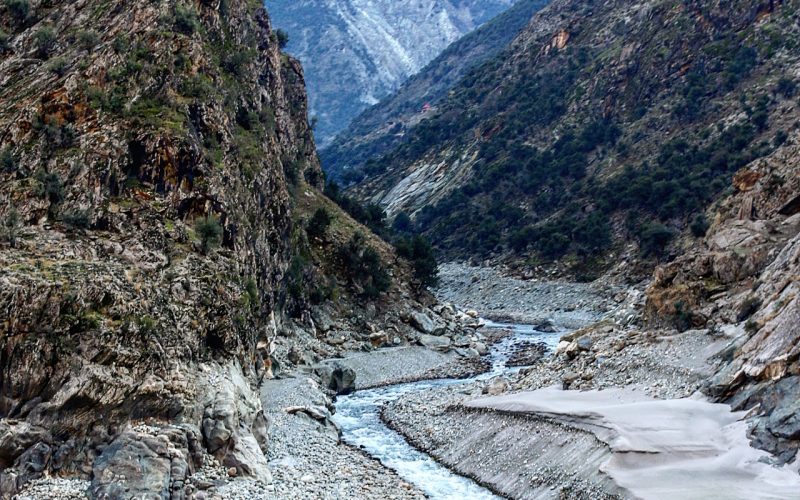
- Rainwater and glacier-fed streams in the northern areas usually have very low TDS because the water has had little contact with minerals.
- River and canal-fed municipal supplies, such as those drawing on the Indus system, are generally in the low-to-moderate range, though quality can change seasonally.
- Deep groundwater in parts of Punjab is often sweet, but readings rise in areas where saline groundwater lies close to the fresh layer.
- Borings in coastal Karachi, lower Sindh, Thar and parts of Balochistan frequently produce brackish water with high TDS.
- Tanker water can be anything, because its source changes from supplier to supplier and even trip to trip.
A change in your usual reading is useful information in itself: a sudden jump may mean a new tanker source, seawater intrusion in a coastal boring, or a cross-connection in the pipeline.
What a lab report tells you that a meter cannot
A TDS meter gives one number. A proper water analysis breaks that number down and adds the tests that matter for health. A typical drinking-water report includes:
| Parameter | Why it matters |
|---|---|
| Total coliforms and E. coli | Shows faecal contamination — the main cause of waterborne disease |
| Turbidity | Mud and particles that shelter germs |
| pH | Acidity or alkalinity; affects taste and pipe corrosion |
| Hardness (calcium, magnesium) | Scaling in kettles; also part of mineral intake |
| Chloride and sodium | Explains a salty taste |
| Arsenic, fluoride, nitrate | Specific health contaminants found in some regions |
The Pakistan Council of Research in Water Resources (PCRWR) runs water-testing laboratories in several cities, and accredited private labs offer the same service. If you are deciding between UF and RO, one lab test is worth more than a dozen TDS-pen demonstrations.
Common TDS myths
“Zero TDS is the purest, healthiest water.”
Distilled or heavily processed RO water is close to zero TDS, but that does not make it healthier. It simply means the minerals are gone. Most people find it tastes flat.
“A purifier that doesn’t lower TDS isn’t working.”
A UF purifier is not supposed to lower TDS. Its job is to remove germs and particles. Judging it by a TDS pen is like judging a mosquito net by how much air it blocks.
“High TDS is always dangerous.”
Moderately high TDS from calcium and magnesium is mostly a taste and scaling issue. Very high TDS from salts makes water unpalatable and, for some people with kidney or heart conditions, worth avoiding — follow your doctor’s advice.
“My neighbour’s reading applies to me.”
Two houses on the same street can draw from different borings at different depths. Always test your own water.
What about water that is salty and contaminated?
Many borings in coastal Karachi and interior Sindh deliver water that is both brackish and biologically unsafe. In that case an RO system is needed, and a good one will include a sediment pre-filter and protection against bacteria. A UF stage ahead of the RO membrane can reduce fouling and extend membrane life. If you use RO, remember to sanitise the storage tank regularly, because stored water can be recontaminated.
TDS and hardness: related but different
Hardness measures only calcium and magnesium, while TDS measures every dissolved substance. Hard water leaves white scale in kettles and on taps and makes soap lather poorly, but the minerals responsible are not a health hazard and contribute to your daily intake. If scale is your only complaint and your TDS is otherwise moderate, a full RO system is rarely necessary; descaling appliances regularly is often enough.
The practical takeaway
TDS tells you whether your water is salty — nothing more. Measure it before you buy any purifier. Below about 600 mg/L, focus on removing what TDS cannot detect: bacteria, parasites, mud and micro-plastics, with a certified ultrafiltration purifier that keeps your minerals. Above about 1,000 mg/L, choose RO. In between, let taste and a lab test decide.
Sweet water? Make it safe — and keep the minerals.
Water Ka Doctor removes 99.9999% of bacteria, parasites and micro-plastics without changing the healthy minerals in your water. No electricity, two-year life, $18.
Shop Water Ka Doctor