Children spend a large part of their day at school, and during that time they drink whatever water the school can provide. In too many Pakistani schools, that means a hand pump, an uncovered tank or a cooler filled from an unknown source. When we installed community filters at two primary schools in Haroonabad, the change was visible within weeks: fewer stomach illnesses, fewer absences, and teachers who no longer worried about what was in the children’s cups. This article explains why clean water at school matters so much, and gives a practical plan any school, parent committee or donor can follow.
Why clean water at school matters
Global monitoring by WHO and UNICEF has repeatedly shown that a large share of the world’s schools lack basic drinking water services, with rural schools in South Asia and sub-Saharan Africa among the most affected. In Pakistan, many government and low-fee private schools rely on hand pumps, shallow wells or municipal lines that are frequently contaminated.
The impact on children is direct:
- Illness. Diarrhoea, typhoid, cholera, dysentery and hepatitis A are all spread through contaminated water. Young children are the most vulnerable, and repeated diarrhoeal episodes can affect growth and nutrition.
- Absenteeism. Every episode of waterborne illness means days missed from class. For children who are already behind, repeated absences make it harder to keep up.
- Concentration. Even mild dehydration can make children tired, irritable and less able to focus. When the only water available is dirty or tastes bad, many children simply do not drink during the school day.
- Girls’ attendance. Safe water is closely linked to sanitation and hygiene. Schools with water, toilets and handwashing facilities are better able to keep older girls in school.
What we learned in Haroonabad
In Haroonabad, local activist organisations helped us identify a school with a severe need for clean drinking water. The school had more than 500 regular students. Diarrhoea and cholera were common in the area because of poor water infrastructure, and school-going children were among those most affected.
We installed community filters using our ERM hollow-fibre ultrafiltration technology, which removes bacteria, parasites and suspended solids without electricity. After the project, the health of both staff and students improved noticeably, and attendance improved too. One of the teachers, Shahzeb Iqbal, described it this way:
“As a school teacher, I’ve seen a visible and positive change since the installation of community filters by Pakvitae at our school, as now the kids have access to clean drinking water while attending the school.”
Three practical lessons came out of this and our other community projects:
- The filter is only part of the solution. Safe storage, clean cups and handwashing matter just as much.
- Someone must own maintenance. Systems work best when a named teacher or caretaker is trained and responsible for the simple backwash routine.
- Off-grid matters. In rural Punjab and Sindh, electricity is unreliable. A filter that needs no power keeps working on the days children need it most.
Step 1: Assess your school’s water
Before buying anything, understand your starting point. A simple assessment covers:
| Question | Why it matters |
|---|---|
| Where does the water come from? (hand pump, borehole, municipal line, tanker) | Different sources have different risks and need different treatment. |
| Is the water salty or does it taste “heavy”? | High TDS cannot be fixed by ultrafiltration and may need RO or an alternative source. |
| Is the water cloudy, muddy or smelly? | High sediment means more frequent backwashing and possibly pre-settling. |
| How many students and staff are there? | This determines how much filtered water is needed each day. |
| Is there reliable electricity? | If not, choose a non-electric system. |
| How is water stored and served now? | Open buckets and shared cups recontaminate even clean water. |
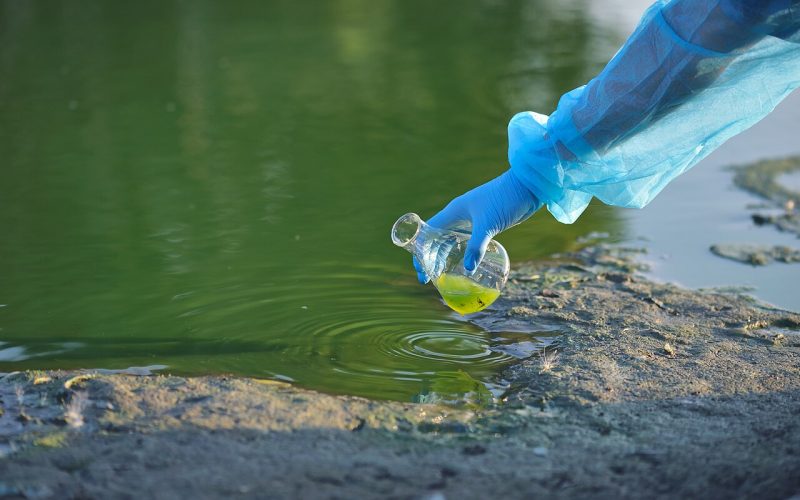
A laboratory test for bacteria and TDS gives you hard data. Our water quality testing service provides a plain-language report with a recommendation, and our article on TDS and when you need RO explains how to interpret the results.
Step 2: Choose the right system
Schools have different needs from homes. A good school water system should be:
- High-capacity enough to serve break-time rushes, not just a trickle through the day.
- Robust, with few moving parts and nothing that children can easily break.
- Non-electric, or at least able to work during load-shedding.
- Easy to maintain by non-technical staff.
- Low running cost, because school budgets rarely include money for expensive cartridges.
For most schools we recommend our Community Filter Station, which is sized for the number of students and connected to a clean storage tank and taps. For very small schools, madrassas or classrooms, several Water Ka Doctor units can be connected to clean covered containers — each delivers up to 60 litres per hour without electricity.
The underlying technology is the same: thousands of intrinsically anti-microbial hollow fibres with a 0.1 micron pore size, which physically block bacteria, parasites and micro-plastics while letting clean water and its natural minerals through. You can read more on our technology page.
Step 3: Install it where children will use it
Placement is as important as the equipment:
- Put the water point in a shaded, accessible place near classrooms or the playground, so children do not have to go far.
- Make sure the area drains well. Puddles around a water point become muddy and unhygienic.
- Install taps at child height, with separate taps for drinking and for handwashing if possible.
- Use covered storage for filtered water, with a tap — never an open drum that children dip cups into.
- Ideally, place a handwashing station with soap next to the drinking water point.
Step 4: Make maintenance a routine
A filter that is not maintained will slow down and eventually be abandoned. The routine for ultrafiltration is simple:
- Backwash on a fixed schedule — daily or a few times a week if the source water is muddy. This flushes out trapped dirt and restores the flow rate.
- Clean storage containers and taps weekly.
- Record each backwash and any problems in a simple logbook.
- Check for leaks, cracked pipes or reduced flow, and report problems early.
- Replace the membrane at the end of its rated life.
We train a named teacher or caretaker at handover, and our Installation & Care Plan adds scheduled check-ups. For more detail, read our maintenance guide.
Step 5: Teach hygiene alongside clean water
Clean water has the biggest impact when it is paired with hygiene education. Simple messages, repeated regularly, change habits that children take home to their families:
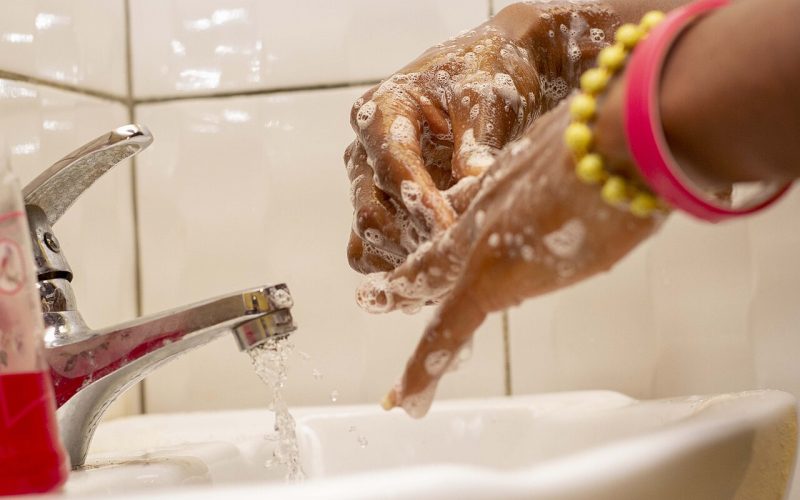
- Wash hands with soap after using the toilet and before eating.
- Use your own clean bottle or cup — do not share.
- Do not drink from the hand pump directly; use the filtered tap.
- Drink water regularly during the day, especially in summer.
Our hydration guide for families includes practical advice on how much water children need and how to encourage them to drink.
Funding a school water project
Many schools cannot fund a system from their own budget. Successful projects we have seen are funded through:
- Parent-teacher committees pooling small contributions.
- Local philanthropists and businesses sponsoring a water point in memory of a family member — a form of sadaqah jariyah that many donors value.
- Corporate CSR programmes supporting schools near their operations.
- NGOs and development partners running WASH-in-schools programmes.
We work with partners of all sizes, from a single parent committee to large NGOs. For disaster-affected areas, our Emergency Relief Filter Pack provides ten units for rapid distribution.
Common mistakes to avoid
We have visited many schools where a well-meant water project stopped working within a year. The causes are almost always the same, and all of them are avoidable:
- Choosing an electric system for a school without reliable power. RO and UV units are useless during load-shedding, and in many rural areas outages last most of the school day. If power is unreliable, choose a non-electric system from the start.
- Installing RO when it is not needed. Reverse osmosis wastes a large share of the incoming water, needs electricity and frequent cartridge changes, and strips out useful minerals. It is the right answer for salty water, but for sweet water contaminated with germs, ultrafiltration is simpler and cheaper to run.
- Filtering into an open drum. Clean water poured into an open drum, with children dipping shared cups into it, can be contaminated again within an hour. Always use covered storage with a tap.
- No budget for maintenance. Even low-maintenance systems need occasional parts, cleaning materials and eventually a replacement membrane. Agree from the start who pays for this.
- No training handover. When the only person who understood the system leaves the school, maintenance stops. Train at least two staff members and leave written instructions in Urdu and English next to the filter.
- Ignoring the summer peak. Demand can double in May and June. Size the system for the hottest weeks of the year, not for a mild March morning.
Planning for these issues before installation costs very little, and it is the difference between a water point that serves children for years and one that becomes another broken cooler in the corridor.
Measuring the impact
Schools, donors and parent committees all want to know whether a project is working. You do not need a research team to track this. Before installation, note average daily attendance for a few months and ask teachers to keep a simple record of children sent home sick with stomach complaints. Continue the same records after installation. Combined with the backwash logbook and an occasional water test, this gives you honest evidence of impact — and a strong case for funding the next school.
Bring clean water to a school
Tell us about your school or project, and we will recommend a system, quote honestly and train your staff.
See the Community Filter StationPractical takeaway
Clean drinking water in schools is one of the most cost-effective investments in children’s health and education. Assess your water, choose a robust non-electric system, place it where children will use it, make maintenance someone’s job, and pair it with hygiene education. Haroonabad showed us that when those pieces come together, children stay healthier and spend more days in the classroom.