Plastic was supposed to make life cleaner and more convenient. Today, the same material that wraps our food and carries our water is breaking down into fragments so small that they slip into rivers, wells, municipal pipes and even sealed water bottles. Scientists now call them microplastics and, at the smallest end, nanoplastics. This guide explains what they are, how they reach the glass on your dining table in Pakistan, what researchers currently know (and don’t know) about health effects, and the practical steps that actually reduce your family’s exposure.
What exactly are microplastics and nanoplastics?
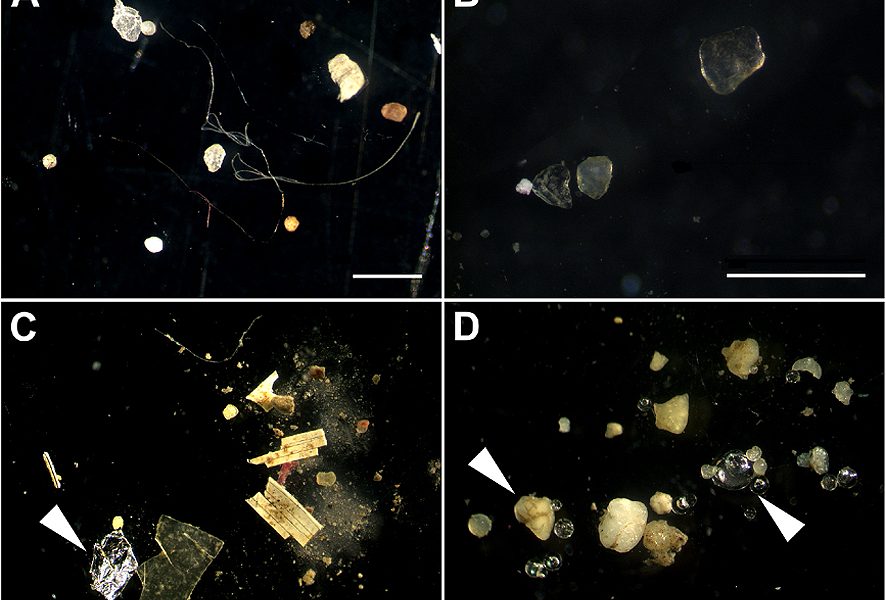
Microplastics are pieces of plastic smaller than 5 millimetres — about the size of a sesame seed and below. Most of the particles found in drinking water are far smaller than that, measured in microns (one micron is a thousandth of a millimetre). Nanoplastics are smaller still: below 1 micron, which is too small to see even with an ordinary light microscope.
They come in two broad families:
- Primary microplastics are manufactured small — microbeads once used in face scrubs, plastic pellets (“nurdles”) that feed factories, and fibres shed from synthetic clothing.
- Secondary microplastics form when larger plastic breaks down. A shopping bag in a nullah, a bottle on a beach in Karachi or a sack of fertiliser left in the sun slowly fragments under heat, ultraviolet light and friction, releasing millions of particles over years.
Common polymers found in water include polyethylene (bags, bottle caps), polypropylene (food containers, sacks), PET (water and soft-drink bottles), polystyrene and nylon or polyester fibres from textiles.
How microplastics reach drinking water in Pakistan
Pakistan faces the same plastic problem as the rest of the world, with a few local twists. Waste collection does not reach every neighbourhood, open drains carry rubbish to rivers and the sea, and many households store water in plastic tanks and cans for days. Each of these creates a pathway:
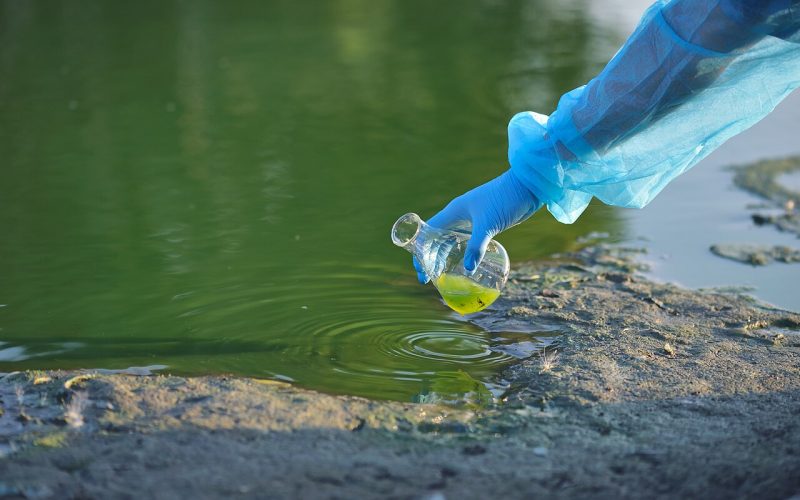
- Surface water. The Indus and its tributaries, canals and reservoirs receive plastic waste from cities, farms and industry. Where municipal supplies draw from surface water, particles that are not caught by treatment can pass into the network.
- Groundwater. Shallow wells and hand pumps can pick up fine particles that seep down with contaminated runoff, especially where waste is dumped or burned near the water source.
- Old pipes and joints. Ageing plastic pipes and fittings can shed fragments, and leaks allow dirty water to enter lines when pressure drops — a familiar problem in cities with intermittent supply.
- Storage tanks and containers. Rooftop tanks exposed to the sun, reused jerrycans and cheap containers wear down over time. Scratched, sun-baked plastic sheds more particles.
- Bottles and caps. Opening and closing a plastic bottle, squeezing it, or leaving it in a hot car can release particles directly into the water you are about to drink.
- Air. Synthetic fibres float in household dust and settle into open buckets, matkas and glasses.
What the research says so far
Interest in microplastics in drinking water took off after investigative studies in 2017–2018 found plastic fibres in the majority of tap water samples collected across several continents, and in most bottled water brands tested. Since then, laboratory methods have improved dramatically.
A widely reported 2024 study by researchers at Columbia University, published in the journal PNAS, used a new laser-based imaging technique to look for nanoplastics in bottled water. It found on average around 240,000 detectable plastic particles per litre, and roughly nine out of ten of those were nanoplastics — particles that earlier methods simply could not count. In other words, the problem had been underestimated because the smallest particles were invisible to older tests.
On health effects, the honest answer is that the science is still developing. The World Health Organization’s review of microplastics in drinking water concluded that, based on the limited evidence available, the particles found in drinking water did not appear to pose an established health risk at typical levels, but it also called for much more research and for reducing plastic pollution in general. Researchers are particularly interested in three questions:
- The particles themselves. Nanoplastics are small enough that they may cross biological barriers such as the gut lining. Scientists are studying whether they accumulate in organs and what that means.
- Chemical additives. Plastics contain additives such as plasticisers, stabilisers and colourants, some of which are known or suspected endocrine disruptors.
- Hitch-hikers. Plastic surfaces can carry biofilms of bacteria and absorb other pollutants. In water that is already microbially contaminated, particles can act as small rafts for germs.
The practical takeaway is the same one doctors give for many uncertain exposures: you do not need to panic, but if reducing exposure is cheap and easy, it is sensible to do it — especially for babies and young children, who drink more water relative to their body weight.
Which water treatment methods remove microplastics?
Because microplastics are solid particles, physical filtration is what works. The key number is the filter’s pore size compared with the size of the particles. Here is how common methods compare:
| Method | Typical pore size / action | Microplastics | Nanoplastics | Germs |
|---|---|---|---|---|
| Boiling | Heat only | Not removed | Not removed | Killed |
| Cloth or sediment filter | 5–50 micron | Larger particles only | No | No |
| Ceramic candle | ~0.5–1 micron | Most | Limited | Most bacteria |
| UV lamp | Light, no filtration | Not removed | Not removed | Inactivated |
| Hollow-fibre ultrafiltration (UF) | 0.01–0.1 micron | Removed | Larger nanoplastics removed | Bacteria, parasites removed |
| Reverse osmosis (RO) | ~0.0001 micron | Removed | Removed | Removed (plus minerals and salts) |
Both ultrafiltration and reverse osmosis physically block microplastics. The difference is what else they do. RO also strips out dissolved minerals and salts, needs electricity and line pressure, and typically wastes a significant share of incoming water. Ultrafiltration keeps the minerals, works without power and wastes nothing, but it cannot remove dissolved salts. You can read a full comparison in our guide to ultrafiltration vs RO vs UV purifiers.
How Water Ka Doctor keeps plastic particles out
Water Ka Doctor is built around thousands of hollow fibres, each one a tiny straw whose wall is a membrane with pores of 0.1 micron. Water is pushed through the wall by ordinary tap pressure or gravity; anything larger than the pores — sand, silt, rust, bacteria, cysts and plastic fragments — stays on the outside. That is why it removes 99.9999% of bacteria, pathogens and parasites as well as micro- and nano-plastics and other undissolved impurities, while delivering up to 60 litres per hour without electricity.
Two features matter specifically for plastic particles:
- Surface filtration with backwash. Particles collect on the membrane surface rather than deep inside it. A quick backwash with the supplied syringe flushes them out, restoring flow. Our backwash and maintenance guide shows how.
- ERM anti-microbial fibres. Because the membrane material itself is intrinsically anti-microbial, germs that ride in on plastic particles are killed on contact instead of forming a slimy biofilm. Learn more on our technology page.
Ten everyday ways to reduce plastic in what you drink
A good filter is the biggest single step, but daily habits help too:
- Filter water at the point of use — right before you drink it — rather than relying only on treatment upstream.
- Store filtered water in glass bottles, steel containers or a clay matka rather than thin plastic.
- Never leave plastic bottles in a hot car or in direct sun; heat speeds up shedding.
- Do not reuse single-use PET bottles for months; they scratch and crack.
- Avoid pouring boiling water into plastic jugs or making tea in plastic flasks.
- Clean and cover rooftop tanks; replace tanks that have become brittle or faded.
- Use a steel or glass kettle instead of a plastic electric kettle where possible.
- Dust and sweep regularly — household dust is a significant source of synthetic fibres.
- Choose natural-fibre clothes for babies and wash synthetic fabrics in full loads at lower temperatures to reduce fibre shedding.
- Reduce single-use plastic at home: carry a cloth bag and a refillable steel bottle of filtered water.
Is bottled water the safer choice?
Many families in Pakistan buy 19-litre dispenser bottles or packs of 1.5-litre bottles believing they are the safest option. Reputable brands do treat their water, but the container itself becomes a source of plastic particles, and the large refillable bottles are washed and reused many times. Quality also varies widely between registered and unregistered suppliers; the Pakistan Council of Research in Water Resources (PCRWR) regularly publishes lists of bottled water brands found unsafe in its monitoring.
Filtering your own water at home and storing it in glass cuts out the bottle as a plastic source and is far cheaper. We break down the numbers in bottled water vs a home filter: the real cost.
The practical takeaway
Microplastics are now part of the environment we all live in, and science is still working out exactly what they mean for long-term health. You do not have to wait for every answer to take reasonable steps. Filter at the point of use with a fine membrane, store water in non-plastic containers, keep plastics away from heat, and support better waste management in your community. Those steps also deliver a much bigger, well-proven benefit: protection from the bacteria and parasites behind diarrhoea, typhoid and cholera.
Keep plastic particles and germs out of every glass
Water Ka Doctor’s 0.1-micron hollow-fibre membrane removes micro-plastics, bacteria and parasites — no electricity, no wasted water, minerals intact. $18 with free delivery across Pakistan.
Shop Water Ka Doctor