A good water filter is a bit like a car: it will serve you faithfully for years if you give it a few minutes of care now and then. For a hollow-fibre purifier such as Water Ka Doctor, that care mostly means one simple habit — backwashing. This guide explains what backwashing is, why it works, exactly how to do it, and how to keep your purifier hygienic and flowing strongly for its full two-year, 10,000-litre life.
Why filter maintenance matters
Every litre of water that passes through your purifier leaves something behind: fine silt, rust flakes from old pipes, algae from a rooftop tank, bacteria, parasite cysts and micro-plastics. That is exactly what you want the filter to do. But as these particles build up on the membrane surface, they form a layer that water has to push through, so flow gradually slows.
Many conventional cartridge filters trap dirt deep inside their structure, so once they clog they must be thrown away. Hollow-fibre ultrafiltration is different. The membrane works by surface filtration: particles collect on the outside of the fibres rather than embedding inside them. That means you can push clean water backwards through the fibres and flush the collected dirt away, restoring most of the original flow. This is the backwash.
Water Ka Doctor’s ERM membrane adds another advantage. Because the fibres are intrinsically anti-microbial, microbes that land on them are killed rather than forming a slimy biofilm — the main cause of “bio-fouling” that permanently clogs many membranes. You can read more about this on our technology page and in ERM hollow-fibre technology explained.
Signs your filter needs a backwash
- Slower flow. The most obvious sign. If filling a glass takes noticeably longer than when the filter was new, it is time.
- Change in water source. Switched from line water to tanker water, or the monsoon has made your supply muddy? Backwash more often.
- After a period of non-use. If the purifier has been sitting for a few days, a backwash and a short flush refresh it.
- Visible discolouration on the inlet side or in the housing.
Step-by-step: how to backwash
Always follow the instruction leaflet that comes in your box, which shows the exact connection points for your model. The general method for hollow-fibre purifiers is:
- Prepare clean water. Fill a clean glass or bowl with water that has already been filtered. Never backwash with dirty water.
- Disconnect the purifier from the tap or supply hose so no unfiltered water is pushed in during the process.
- Fill the backwash syringe supplied in your kit with the clean water.
- Attach the syringe to the clean-water outlet (the end that normally delivers filtered water).
- Push firmly and steadily. Clean water travels backwards through the fibre walls and lifts the dirt layer off the surface. Point the inlet end into a sink or bucket — the first water out will often be visibly dirty.
- Repeat two or three times, or until the water coming out of the inlet looks clear.
- Reconnect and flush. Reattach the purifier to your supply and let the first glass or two of water run to waste before drinking.
The whole process takes about two minutes. Our Family Kit includes the syringe, tubing and spare washers, so everything you need is in one box.
A simple maintenance schedule
| When | What to do | Time needed |
|---|---|---|
| Daily | Wipe the outside of the purifier and the outlet with a clean cloth; keep the outlet covered when not in use. | 30 seconds |
| Every few days, or when flow slows | Backwash with filtered water (2–3 syringe pushes). | 2 minutes |
| Weekly | Check tap adaptor and washers for leaks; time the flow rate. | 2 minutes |
| Monthly | Clean the storage container or bucket that feeds or receives water; wash with soap and rinse thoroughly. | 10 minutes |
| Every 6 months | Clean your rooftop or underground tank; consider a water quality test. | Varies |
| At 2 years / 10,000 litres | Replace the purifier. | — |
Keeping the clean side clean
A membrane removes germs, but water can be recontaminated after it leaves the filter. Most “my filter isn’t working” complaints are really about what happens after filtration.
- Do not touch the outlet tip with fingers, cloths or cups.
- Collect filtered water in a clean container with a lid or tap, and wash it regularly.
- Keep the purifier out of direct sunlight to discourage algae in tubing and housings.
- If you use a bucket-and-hose setup, keep the bucket covered and raised off the floor.
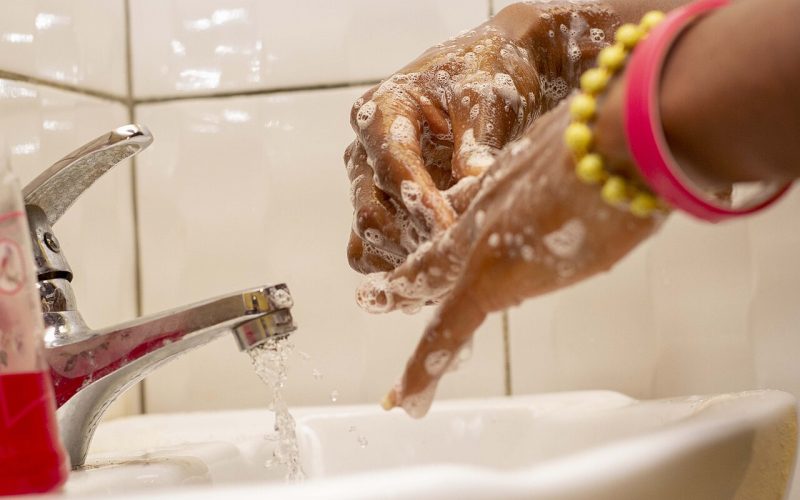
- Wash your hands with soap before handling the purifier or drinking containers.
Troubleshooting common problems
Flow is still slow after backwashing
Repeat the backwash a few more times — very muddy water can leave a stubborn layer. Check that the tap adaptor is fully open and the tubing is not kinked. If your source is extremely turbid (tanker water, flood water), let it settle in a bucket first and pour off the clearer top layer; see our flood water guide for the settling method.
Water leaks at the tap connection
Check the rubber washer is seated correctly and not cracked; replace it with a spare. Do not over-tighten plastic threads.
Water tastes salty or bitter
This is not a filter fault. Ultrafiltration does not remove dissolved salts, so if your source water is brackish the filtered water will taste the same. Test the TDS of your water and read what TDS means and when you need RO.
Water has a plastic or “new” smell at first
Run and discard the first few litres from a brand-new purifier, and after long storage. Any faint new-product smell disappears quickly.
The purifier was dropped or frozen
Physical shock or freezing can crack fibres or housings. If you suspect damage — for example, if flow suddenly becomes much faster than normal, which can indicate a breach — stop drinking from it and contact us on WhatsApp at 0304-1110227 for advice.
Maintenance tips for different water sources
How often you backwash depends heavily on where your water comes from. Here is what we see across Pakistani households:
Municipal line water
Line water in most cities looks clear but often picks up rust, silt and bacteria from old pipes, leaking joints and periods of low pressure. Expect to backwash every week or two under normal conditions, and more often after supply interruptions, when the first water through the pipes is usually dirtiest. Let the tap run for a few seconds before connecting the purifier after a long outage.
Rooftop and underground tanks
Tank water can carry sediment that settles at the bottom and algae or bacteria that grow in warm, uncovered tanks. Clean your tanks every six months, keep lids tight, and backwash whenever flow drops. If you notice green or brown tinges, clean the tank first — the purifier will cope, but you will be backwashing far more than necessary.
Tanker water
Tanker water in cities like Karachi varies hugely in quality and is often turbid. If possible, let it settle in your tank or a bucket before filtering. Backwash daily during periods when you rely on tankers. Our Karachi household water guide has more tips for tanker-dependent homes.
Wells, bores and hand pumps
Groundwater from deeper bores is usually clear; shallow wells and hand pumps may carry fine silt, especially after rain. Backwash every few days, and always after heavy rainfall.
Rainwater and emergency sources
Harvested rainwater is often clean but can carry debris from roofs; flood and river water is the most demanding of all. Pre-settle, pre-filter through a cloth, and backwash after every few buckets.
Storing the purifier when not in use
If you are travelling or will not use the purifier for more than a week:
- Backwash thoroughly with filtered water.
- Drain as much water as you can by shaking gently with both ends open.
- Leave it to air-dry in a clean, shaded place, then store it in a clean bag.
- Before using again, connect it and flush several glasses of water to waste.
Never store the purifier in a hot car or in freezing conditions. In northern areas where winter nights drop below zero, keep the purifier indoors, because water frozen inside the fibres can expand and damage them.
When to replace your purifier
Water Ka Doctor is rated for about 2 years or 10,000 litres. For a family of five drinking and cooking with filtered water, that works out to roughly 13–14 litres a day. Replace it when you reach either limit, or sooner if flow can no longer be restored by backwashing or the unit is damaged. Our Installation & Annual Care Plan includes reminders and a check-up so you never have to keep track yourself.
The two-minute habit that pays off
Backwash when flow slows, keep the clean side clean, and protect the purifier from heat, freezing and chemicals. That is all it takes to enjoy fast, safe water for two full years — and to get the very best value from your purifier, as our bottled water vs home filter cost comparison shows.
Everything you need in one box
The Water Ka Doctor Family Kit comes with the purifier, tap adaptor, tubing, backwash syringe and spare washers — ready to install in minutes.
Get the Family Kit